AC/DC power
Safe, serviceable power from shore, generator, alternator, solar, and batteries to every onboard load.

A division of Accumar Marine Services
Power. Data. Awareness.
Clean power, reliable networks, and electronics that work as one system.

Marine AC/DC electrical, batteries, charging, navigation electronics, monitoring, lighting, and vessel data networks under one integrated technical division.
Real Accumar field work: integrated helm displays, controls, and operator interfaces.
Radar
Navigation and target tracking
Sonar
Depth, fish finding, scanning
NMEA
Integrated vessel networks
AC + DC
Clean power and distribution
Division scope
Every service below remains part of Accumar Marine Services. The division structure makes expertise easier to find while preserving one company, one service standard, and one point of accountability.

AC/DC diagnostics, shore power, distribution, circuit protection, grounding, bonding, and wiring.
Explore service
MFDs, radar, sonar, autopilot interfaces, AIS, VHF, sensors, and NMEA networks.
Explore service
Battery banks, lithium integration, alternators, chargers, inverters, solar, and monitoring.
Explore service
Integrated marine energy systems, inverters, chargers, lithium, solar, distribution, and GX monitoring.
Explore service
Remote vessel monitoring, alarms, sensors, connectivity, and system-health visibility.
Explore serviceLighting selection, power planning, installation, control integration, and troubleshooting.
Explore serviceTechnical capabilities
Brand familiarity
We work across established marine manufacturers, coordinate factory support where available, and evaluate the complete system before recommending equipment.


Manufacturer names and logos belong to their respective owners. Dealer or service authorization applies only where specifically stated on this page.
Mobile division service across Southwest Florida:
Systems matrix
AMS Electrical & Electronics evaluates generation, storage, distribution, protection, loads, networks, sensors, displays, communications, and monitoring as connected vessel infrastructure.
Safe, serviceable power from shore, generator, alternator, solar, and batteries to every onboard load.
Battery chemistry, charge sources, loads, protection, and monitoring designed as one energy system.
Electronics integrated around clean power, reliable data, sensor geometry, and operator use.
Reliable vessel connectivity, condition awareness, and control of essential and exterior lighting systems.
How the division works
The process follows the complete vessel system—not a single component in isolation. That reduces unnecessary parts replacement and creates a cleaner service record for the next decision.
Power sources, distribution, protection, loads, grounds, bonds, batteries, chargers, networks, sensors, electronics, and prior modifications are documented.
Voltage drop, current, charge behavior, network health, source transfer, alarms, interference, and thermal conditions are tested rather than inferred.
Wiring, protection, batteries, charging, displays, sensors, network components, labeling, controls, and documentation are repaired or upgraded as one architecture.
Functions are tested, settings are documented, the owner or crew is shown the system, and future maintenance or expansion needs are recorded.
Field evidence
Project images are shown with factual captions so owners, captains, engineers, and yards can understand the type of work behind the service claim.

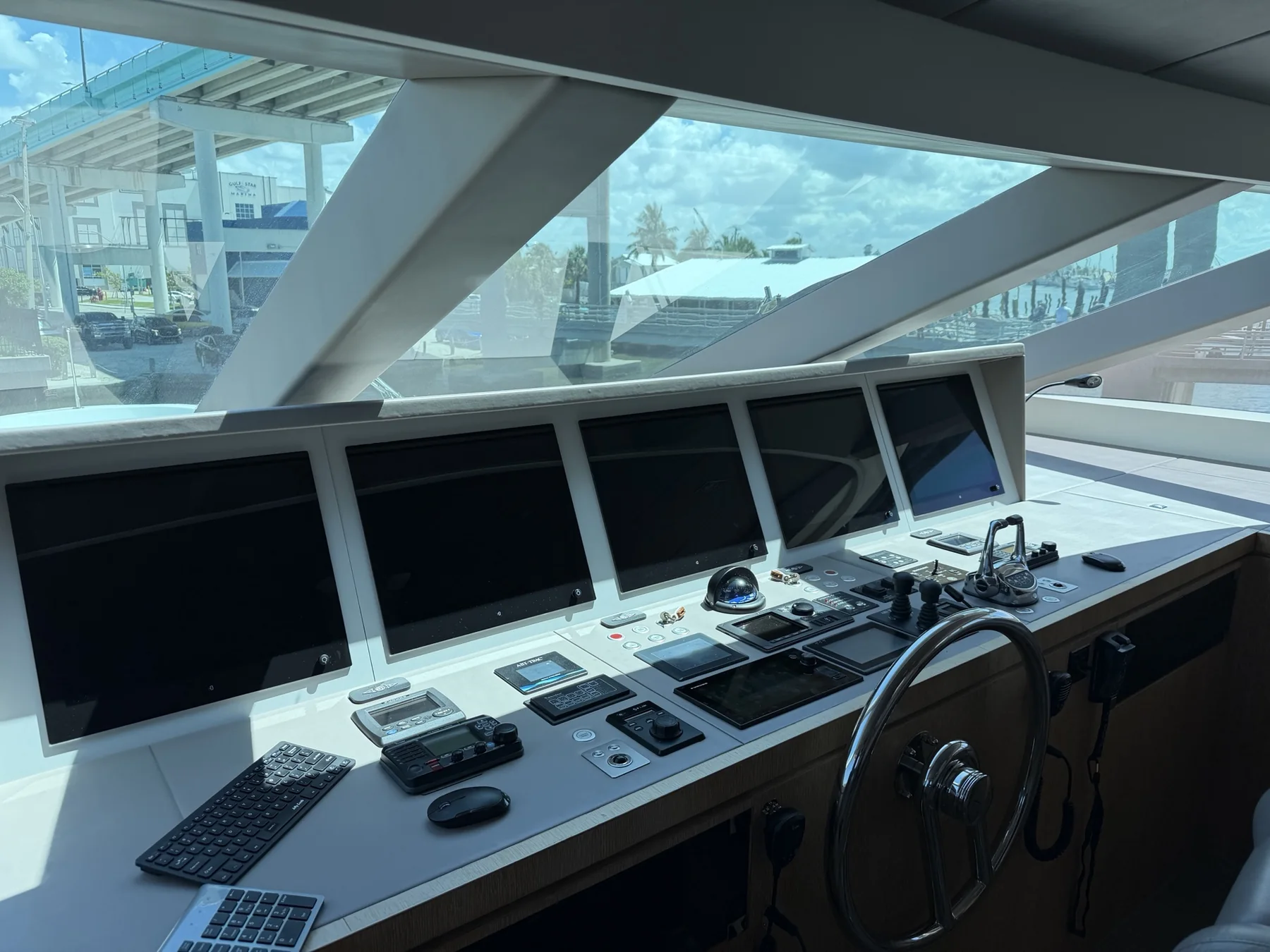
Displays, steering, throttles, and control panels arranged around operator visibility and access at the helm.
View related service
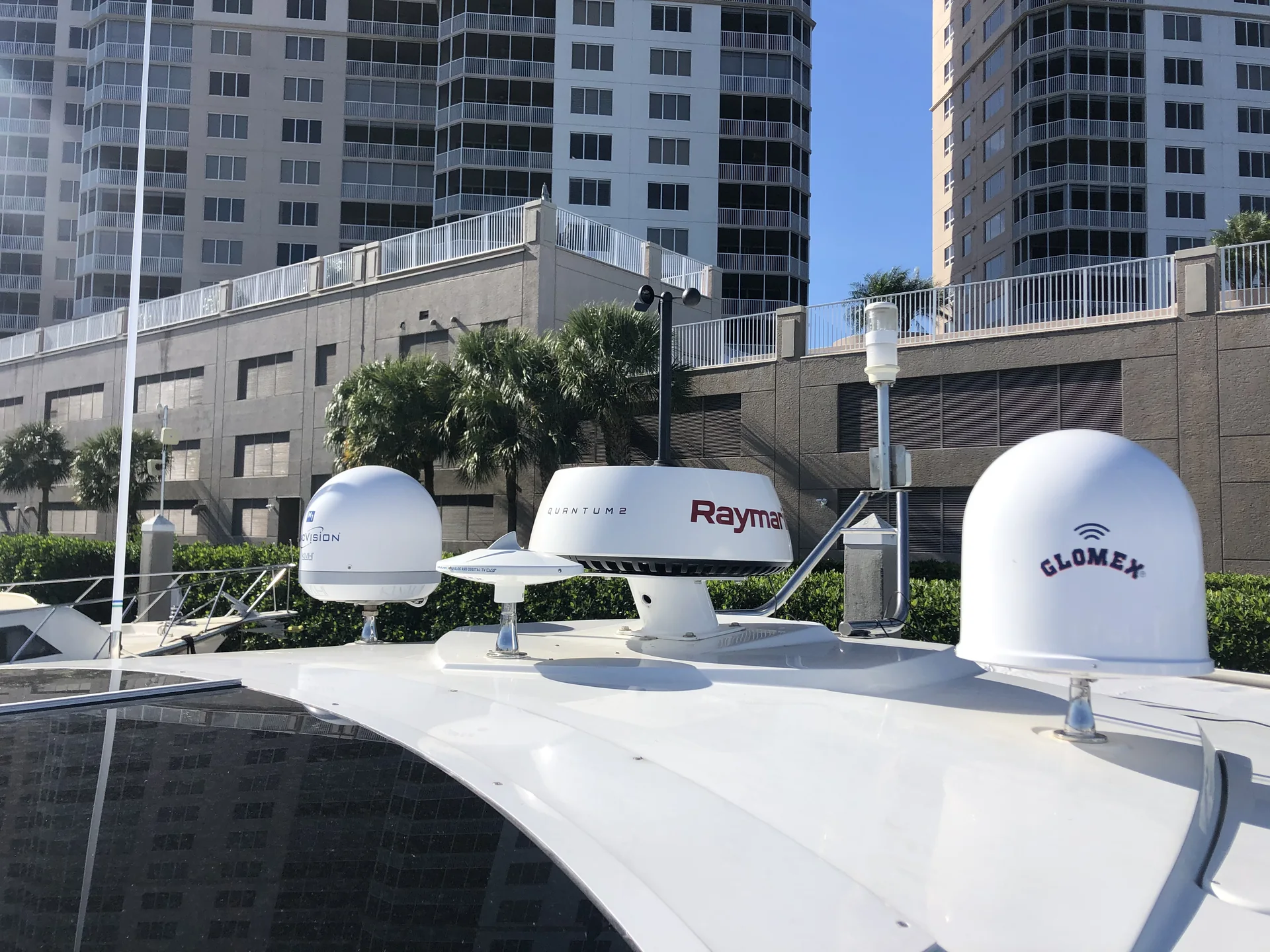
Marine radar and satellite communication equipment mounted above the vessel for clear sky and horizon access.
View related service
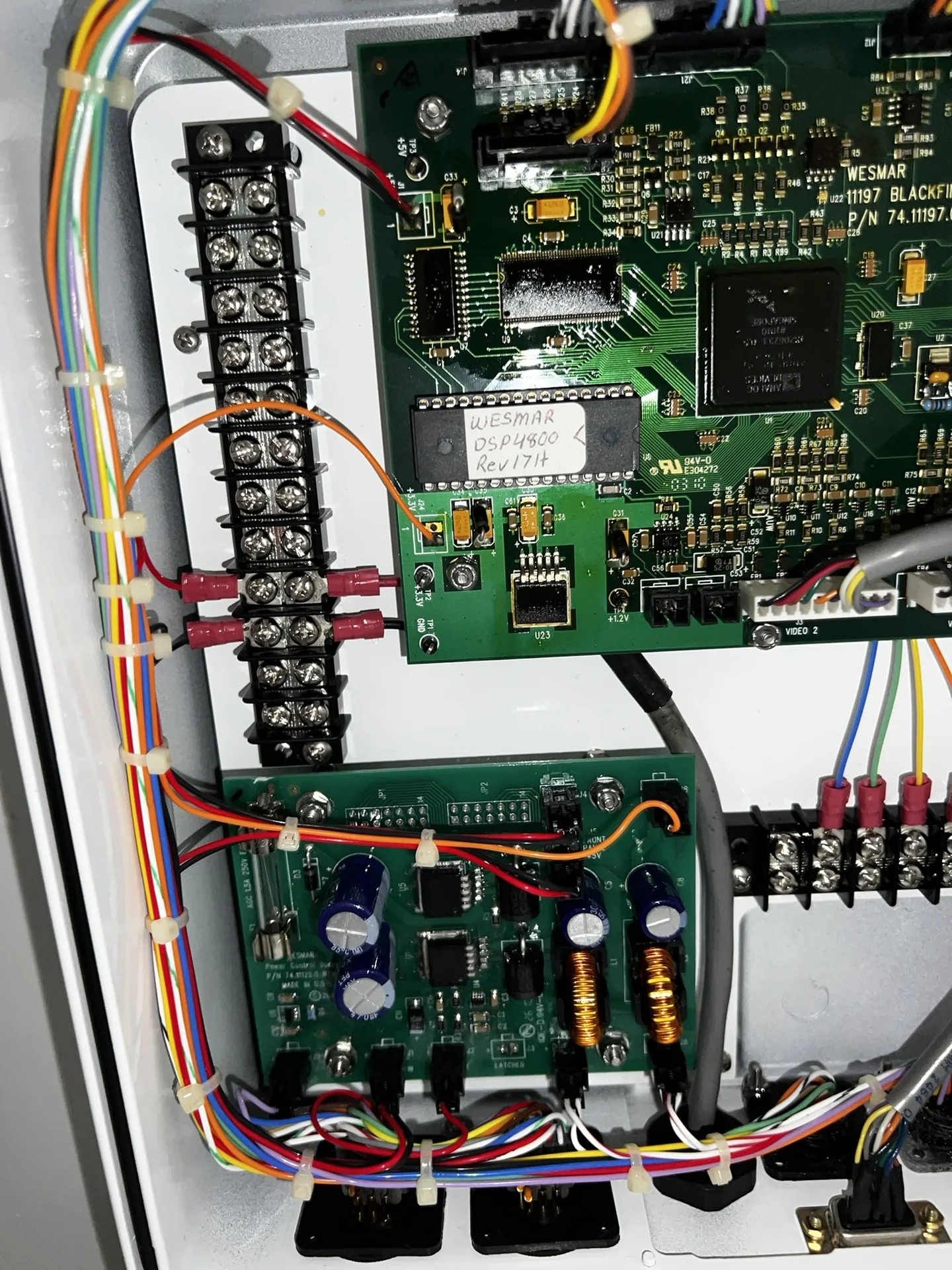
Wesmar control board, terminal strip, and connected harnesses visible inside a service enclosure.
View related service
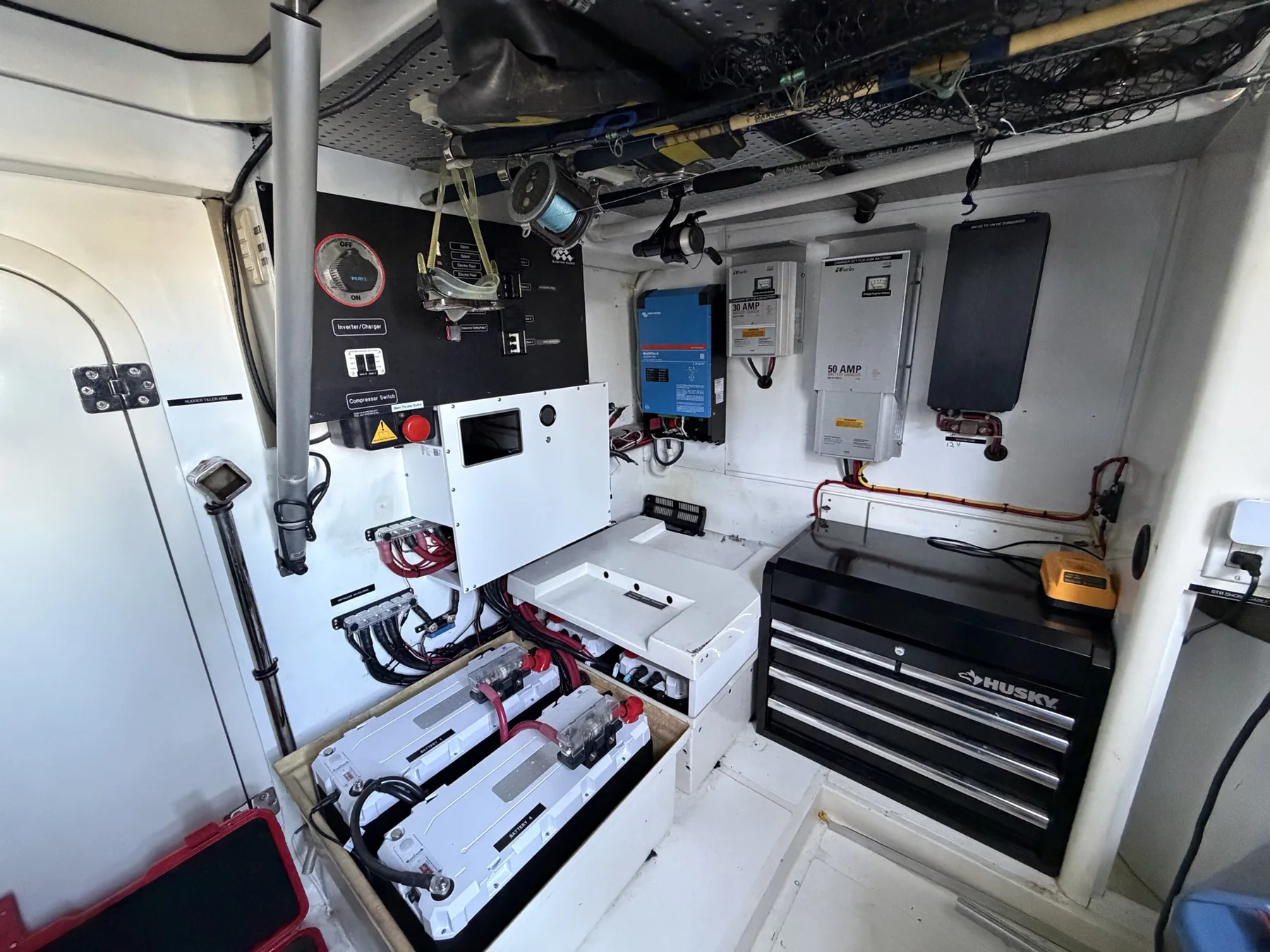
Battery bank, inverter, chargers, distribution equipment, cabling, and service access shown together inside the vessel.
View related service
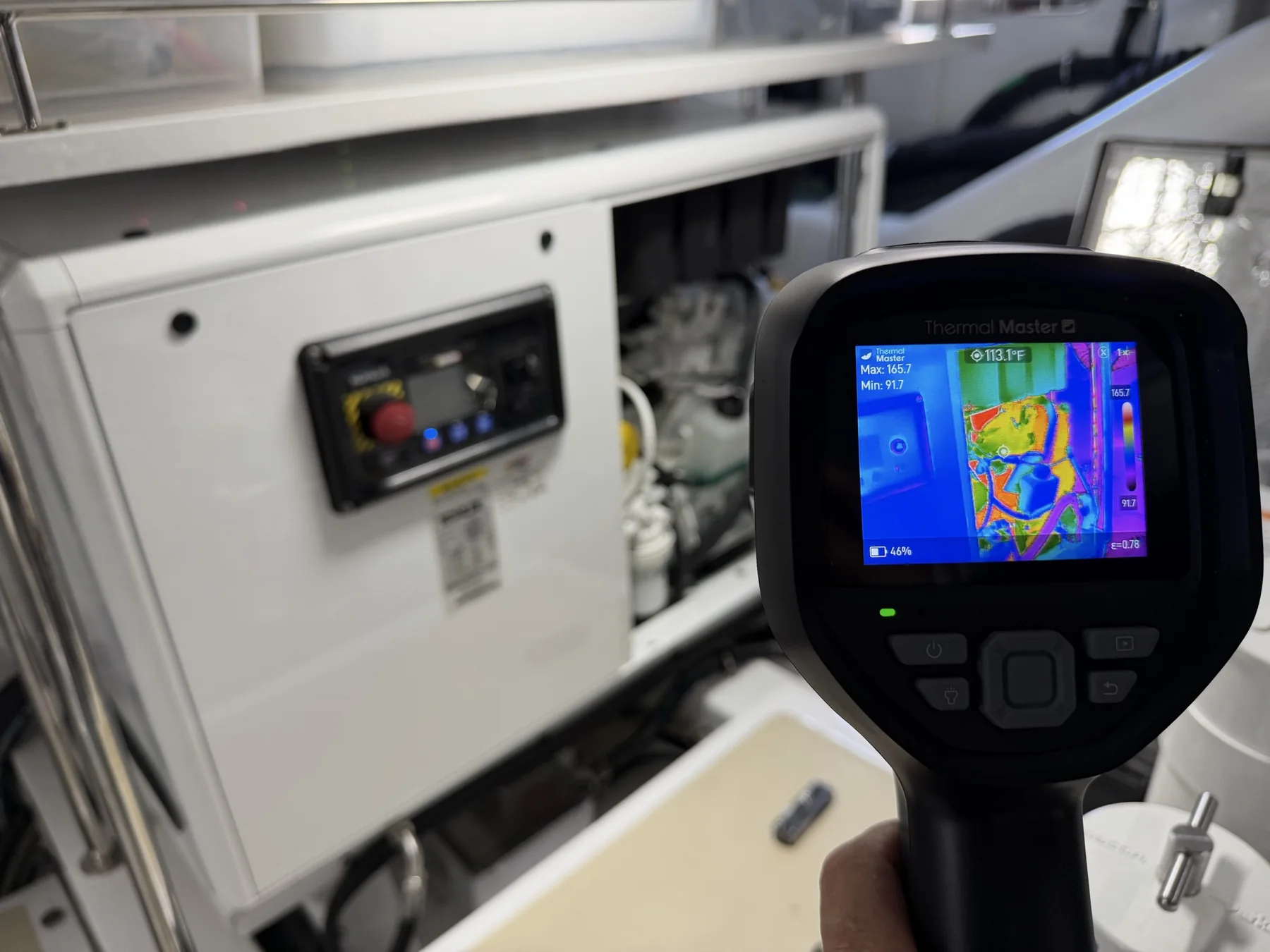
A handheld thermal camera is used to compare visible temperature patterns at an operating equipment enclosure.
View related service
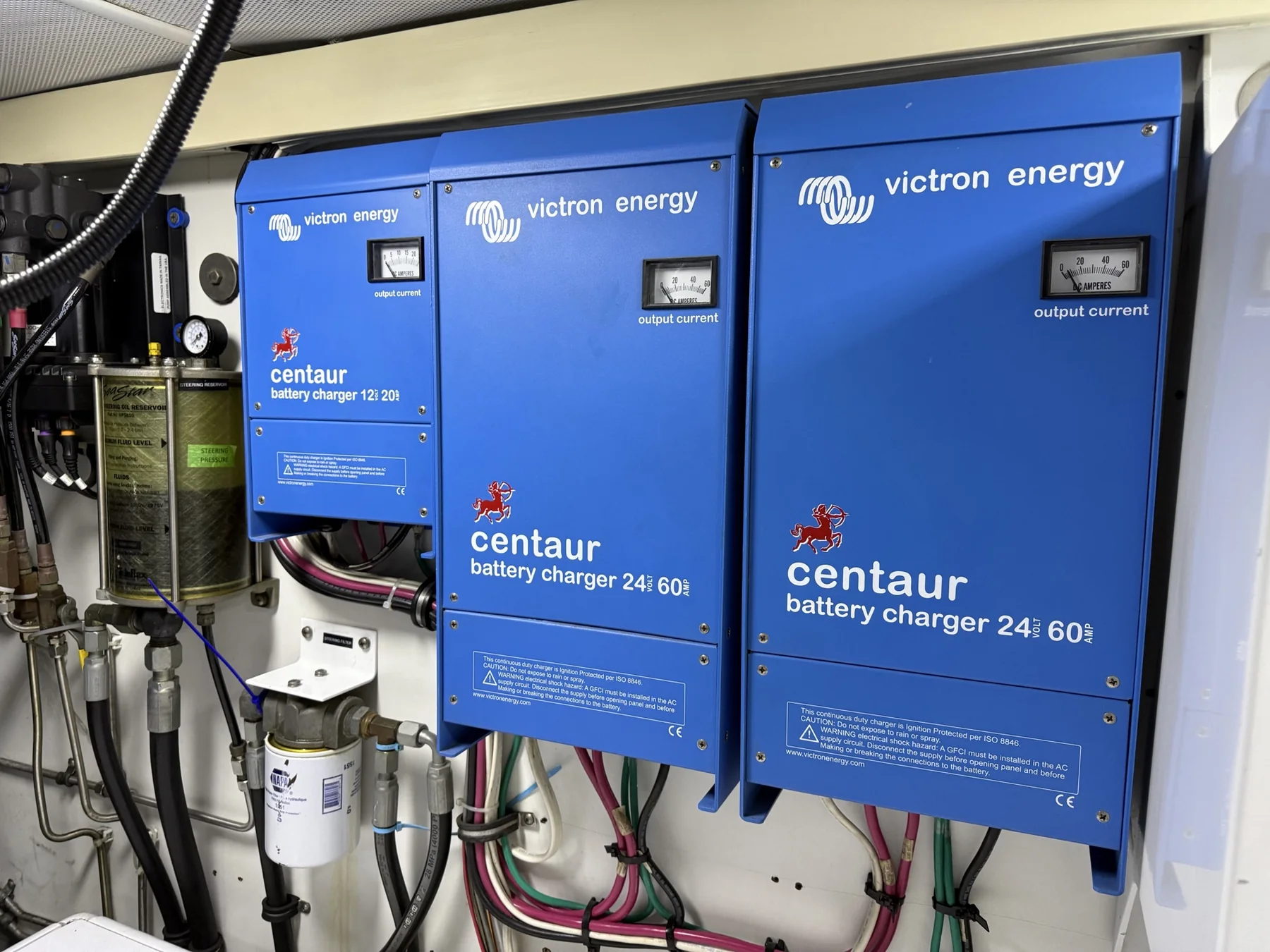
Three battery chargers mounted together with visible cabling and machinery-space service access.
View related service
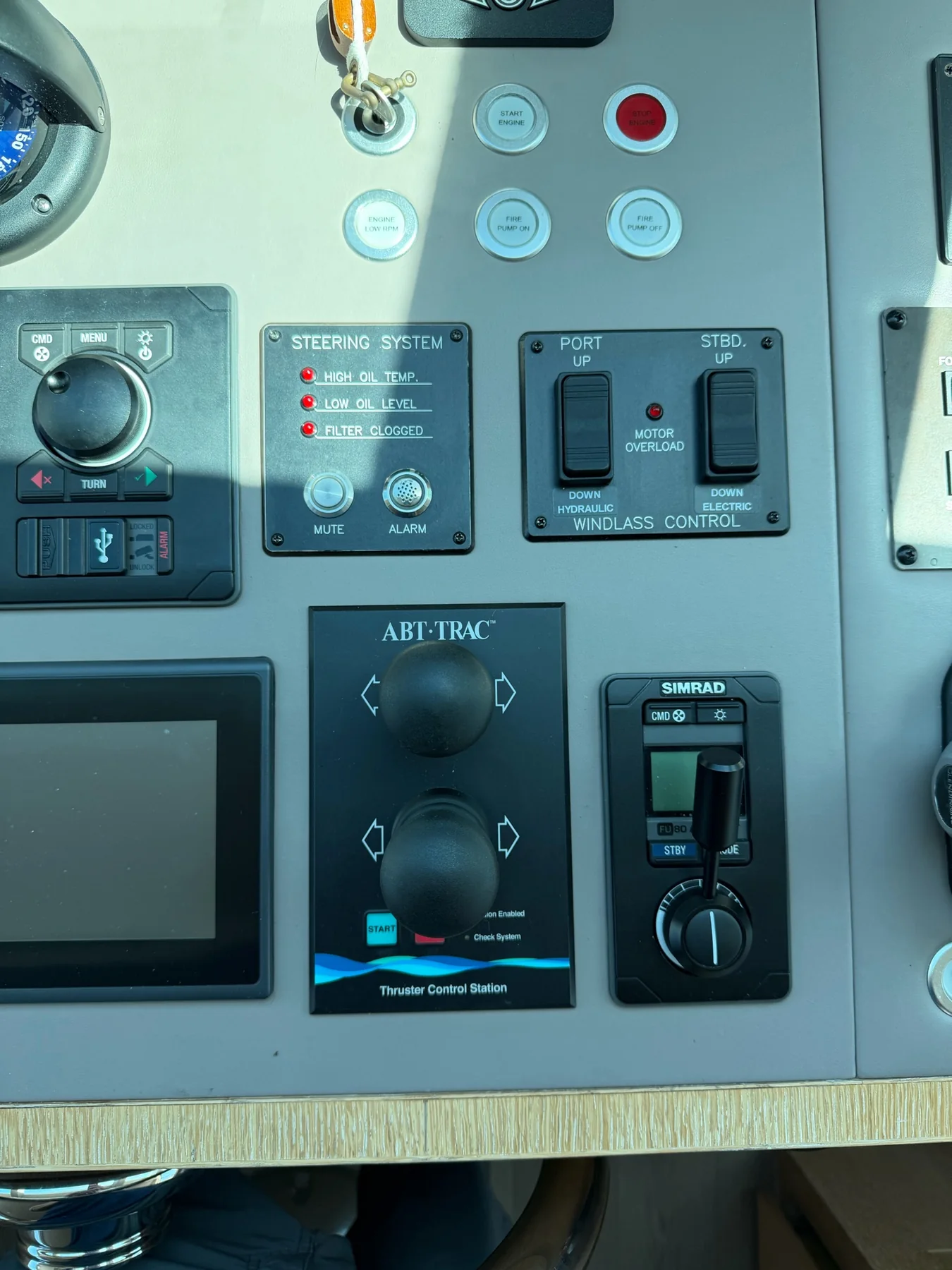
Steering alarms, windlass controls, thruster controls, and autopilot interface documented at the operator station.
View related service
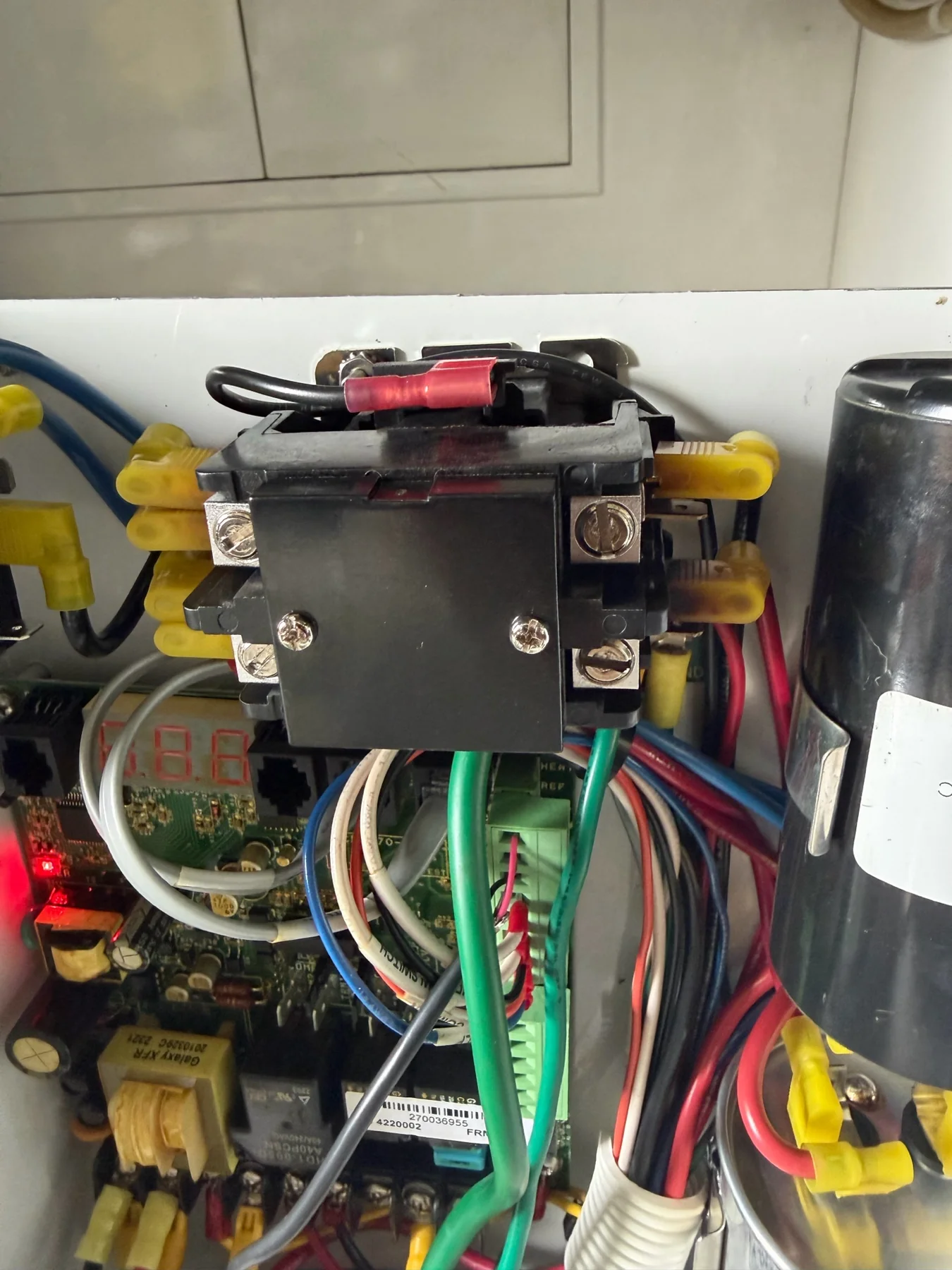
Open equipment panel showing the contactor, circuit board, capacitor, terminals, and connected conductors.
View related serviceGuides and next steps
Use a focused service page, project example, planning tool, or service request instead of searching through a generic list.
Evaluate AC/DC distribution, shore power, batteries, charging, protection, wiring, and priority risks.
Open resourceFuruno, Raymarine, Simrad, B&G, Wesmar, FLIR, Starlink, Garmin, Lumitec, ORCA, radar, sonar, MFDs, GPS, and vessel networks.
Open resourceFuruno and Wesmar scanning-sonar installation, controls, hull units, integration, and service.
Open resourceEstimate vessel loads and energy requirements before battery or charging-system design.
Open resourceIntegrated inverters, chargers, lithium, solar, distribution, and GX monitoring for marine use.
Open resourceDivision FAQ
Yes. The division covers AC/DC distribution, shore power, batteries, charging, inverters, solar, circuit protection, wiring, grounding/bonding, displays, radar, depth and fish finding, scanning sonar, AIS, VHF, FLIR thermal imaging, Starlink, sensors, NMEA networks, lighting, and vessel monitoring.
Yes. A proper conversion reviews loads, alternators, chargers, inverters, cable sizes, protection, battery management, isolation, ventilation, mounting, monitoring, shore power, generator interaction, and the owner’s operating goals.
Common causes include power quality, voltage drop, improper network termination, damaged connectors, water intrusion, overloaded segments, poor device configuration, software compatibility, grounding, interference, or a failed node. The network should be tested as a system.
Yes. Accumar supports Furuno and Wesmar retractable scanning-sonar systems, including installation planning, hull units, deployment equipment, controls, displays, power, network integration, and diagnosis. Hull work may require haul-out and yard coordination.
Often, yes. Compatibility depends on the installed camera, displays, network, Starlink hardware, power architecture, cable routes, and intended controls. AMS verifies those interfaces before defining the installation scope.
Yes. Audits can document distribution, wiring, protection, shore power, batteries, charging, grounding/bonding, labeling, heat damage, corrosion, modifications, and priority recommendations based on the requested scope.
Depending on the installed equipment and connectivity, monitoring may report battery condition, shore power, bilge activity, temperature, tank levels, doors/hatches, alarms, and other sensor states. Coverage and alert reliability depend on power, network, cellular/satellite access, and configuration.
Send a better service brief
Planned maintenance
Scheduled reviews can identify heat, corrosion, loose connections, voltage drop, deteriorated shore power, battery decline, network faults, and undocumented modifications before they become intermittent failures.
Review maintenance programsProject gallery
Selected Accumar field photos showing installed equipment, machinery-space access, system controls, and service conditions aboard working vessels.
Field notes
Brief educational videos from Accumar technicians. Use them as general screening guidance—not as a substitute for the installed equipment manual or a system-specific diagnosis.
A short pre-departure screening sequence covering charger isolation, measurement at the battery posts, visible condition, and a controlled load check.
Technical note: Battery voltage and load-test limits vary by chemistry, temperature, state of charge, and manufacturer. Isolate ignition sources, use appropriate PPE, and do not test a swollen, leaking, hot, or damaged battery.
August heat cooks marine batteries. Ten minutes before a weekend or a storm, kill the charger. Meter on the posts, not the panel. On flooded or AGM, 12.6 at rest is healthy. 12.2 is about half. Lithium voltage lies; you need a shunt. Then put a real load on it. Lights, fridge, a short crank—if the case is not swollen. White crust on terminals is voltage drop. Water: flooded cells only. If it sags, get a free load test at Accumar Marine. We test the battery and the charger.
Yes. The division covers AC/DC distribution, shore power, batteries, charging, inverters, solar, circuit protection, wiring, grounding/bonding, displays, radar, depth and fish finding, scanning sonar, AIS, VHF, FLIR thermal imaging, Starlink, sensors, NMEA networks, lighting, and vessel monitoring.
Yes. A proper conversion reviews loads, alternators, chargers, inverters, cable sizes, protection, battery management, isolation, ventilation, mounting, monitoring, shore power, generator interaction, and the owner’s operating goals.
Common causes include power quality, voltage drop, improper network termination, damaged connectors, water intrusion, overloaded segments, poor device configuration, software compatibility, grounding, interference, or a failed node. The network should be tested as a system.
Yes. Accumar supports Furuno and Wesmar retractable scanning-sonar systems, including installation planning, hull units, deployment equipment, controls, displays, power, network integration, and diagnosis. Hull work may require haul-out and yard coordination.
Often, yes. Compatibility depends on the installed camera, displays, network, Starlink hardware, power architecture, cable routes, and intended controls. AMS verifies those interfaces before defining the installation scope.
Yes. Audits can document distribution, wiring, protection, shore power, batteries, charging, grounding/bonding, labeling, heat damage, corrosion, modifications, and priority recommendations based on the requested scope.
Depending on the installed equipment and connectivity, monitoring may report battery condition, shore power, bilge activity, temperature, tank levels, doors/hatches, alarms, and other sensor states. Coverage and alert reliability depend on power, network, cellular/satellite access, and configuration.
Cross-division support
Accumar Marine Services
Heavy marine motion systems, diagnosed and restored with precision.
AMS Hydraulics provides mobile SWFL marine hydraulic service for the systems that move, steer, stabilize, lift, and position a vessel—from helm input to final actuator.
Accumar Marine Services
Dedicated fin and gyro stabilizer service—from the controller to the hull interface.
AMS Stabilizers provides focused diagnosis, repair, maintenance, installation support, and commissioning for marine fin and gyro stabilization systems across Southwest Florida.
Accumar Marine Services
Engineered comfort and cold-chain performance for demanding vessels.
Marine air conditioning and refrigeration under one specialized division—from Dometic equipment and factory parts sales to installation, diagnostics, chilled-water plants, and custom freezer systems.
Accumar Marine Services
Rigging integrity, sail-handling performance, and deck-level precision.
Custom standing and running rigging, wire fabrication, swaging, rope splicing, furling systems, mast work, inspections, tuning, and charter-vessel support.
Accumar Marine Services
Propulsion and onboard power service built around real diagnostics.
Diesel engines, gasoline outboards, transmissions, cooling systems, and marine generators organized under one accountable mechanical division.
Accumar Marine Services
The essential vessel systems between the engine room and the living spaces.
Watermakers, pumps, plumbing, shore-service equipment, Glendinning products, and multi-system integration organized for maintainability and long-term reliability.
Start with the system—not a guess
We will route the request to the right technical division and coordinate any supporting disciplines through Accumar Marine Services.