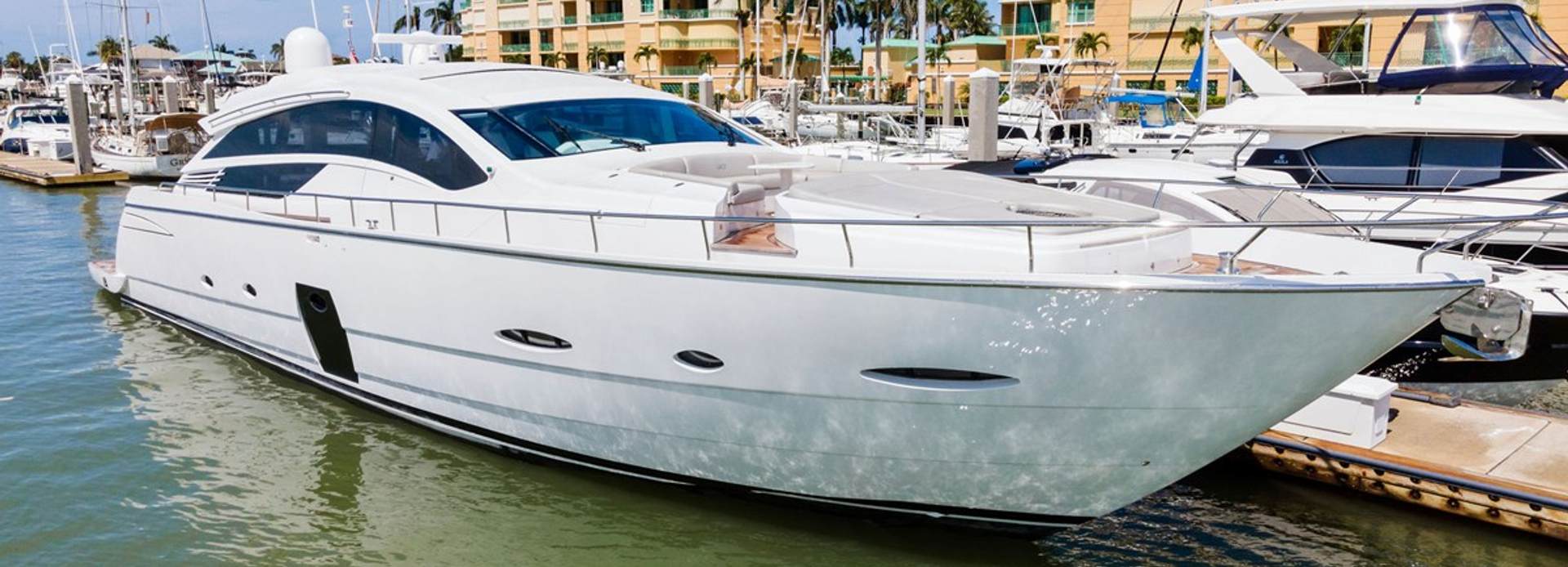
The Pershing 80 "Hawk" — 80 feet of Italian performance engineering
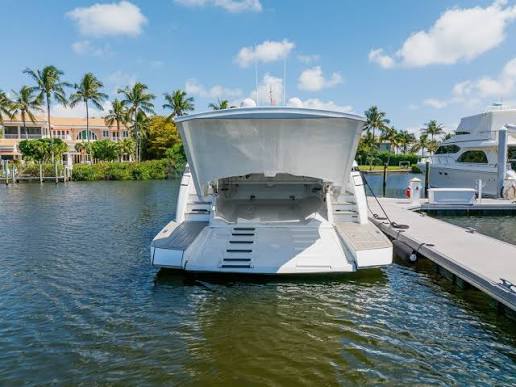
Stern view showing the hydraulic swim platform and tender garage
The Pershing 80: Italian Performance Meets German Engineering
The Pershing 80 is one of the most capable performance yachts ever built. At 80 feet and displacing over 60 tons, this Italian-built express cruiser achieves speeds exceeding 40 knots — powered by twin MAN D2862 LE V12 diesel engines producing approximately 1,400 horsepower each.
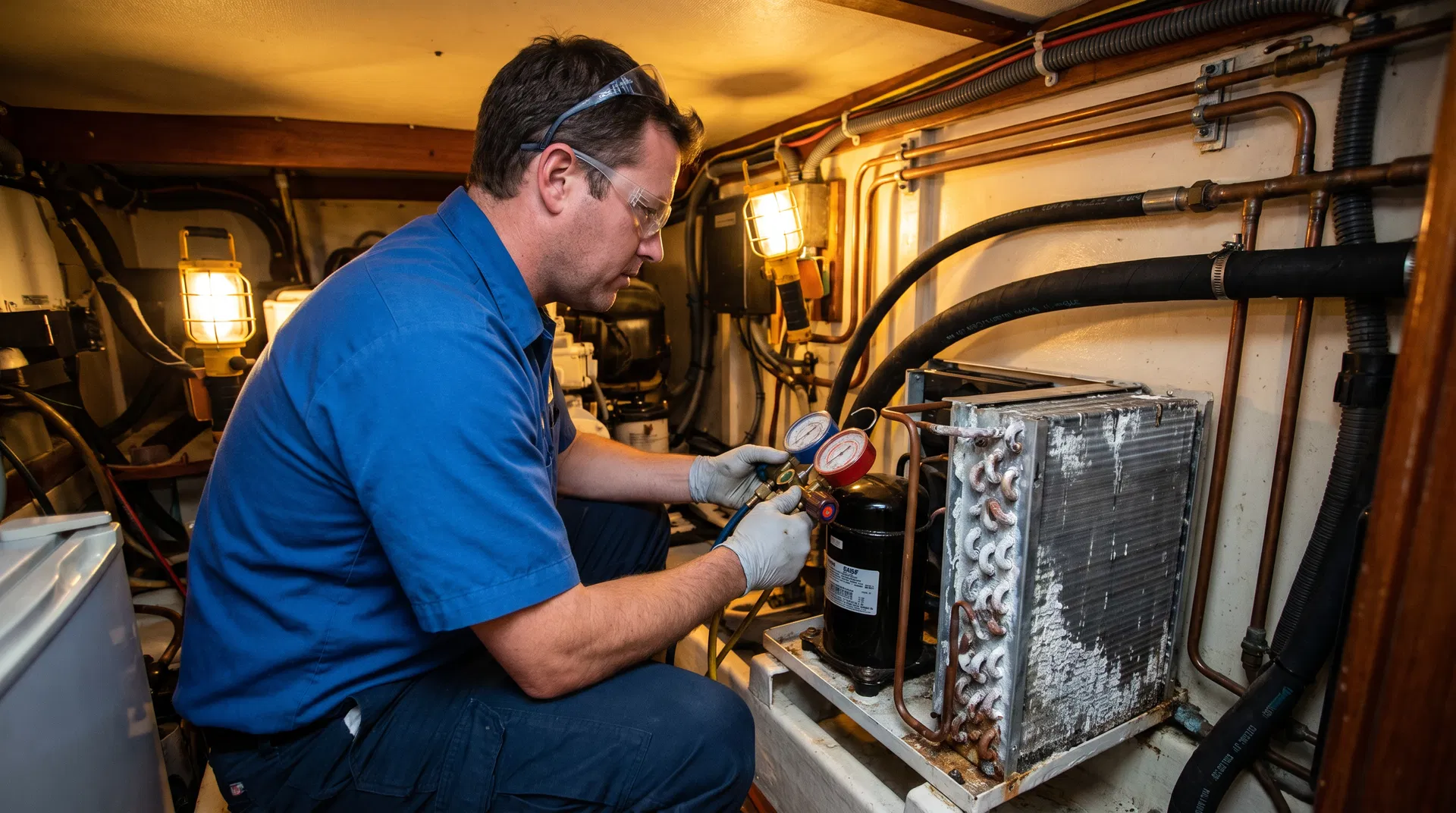
We recently completed a full engine room service on one of these machines here in Southwest Florida. These photos are from the job.
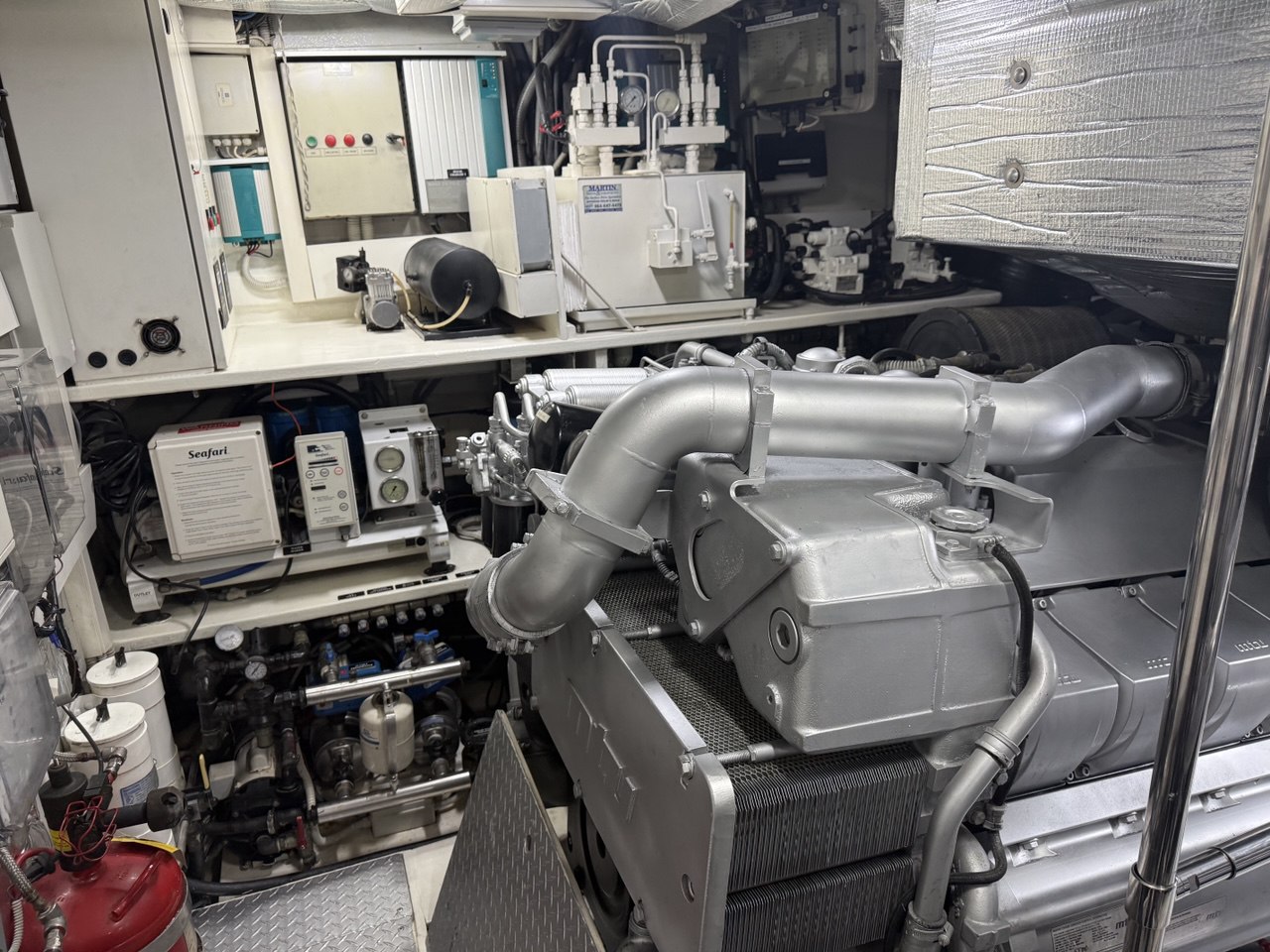
What You're Looking At
The MAN D2862 LE is a 24.2-liter, 12-cylinder, 4-stroke turbocharged diesel with common rail fuel injection. These engines are the gold standard for high-performance yacht propulsion in the 60–100 foot class. Key specs:
| Specification |
Value |
| Engine Model |
MAN D2862 LE 432/436 |
| Configuration |
V12, 4-stroke, turbocharged |
| Displacement |
24.24 liters (1,479 cu in) |
| Power Output |
1,400–1,550 hp per engine |
| Combined Power |
2,800–3,100 hp |
| Fuel System |
Common rail direct injection |
| Dry Weight |
~2,100 kg (4,630 lbs) each |
| Rated Speed |
2,300 RPM |
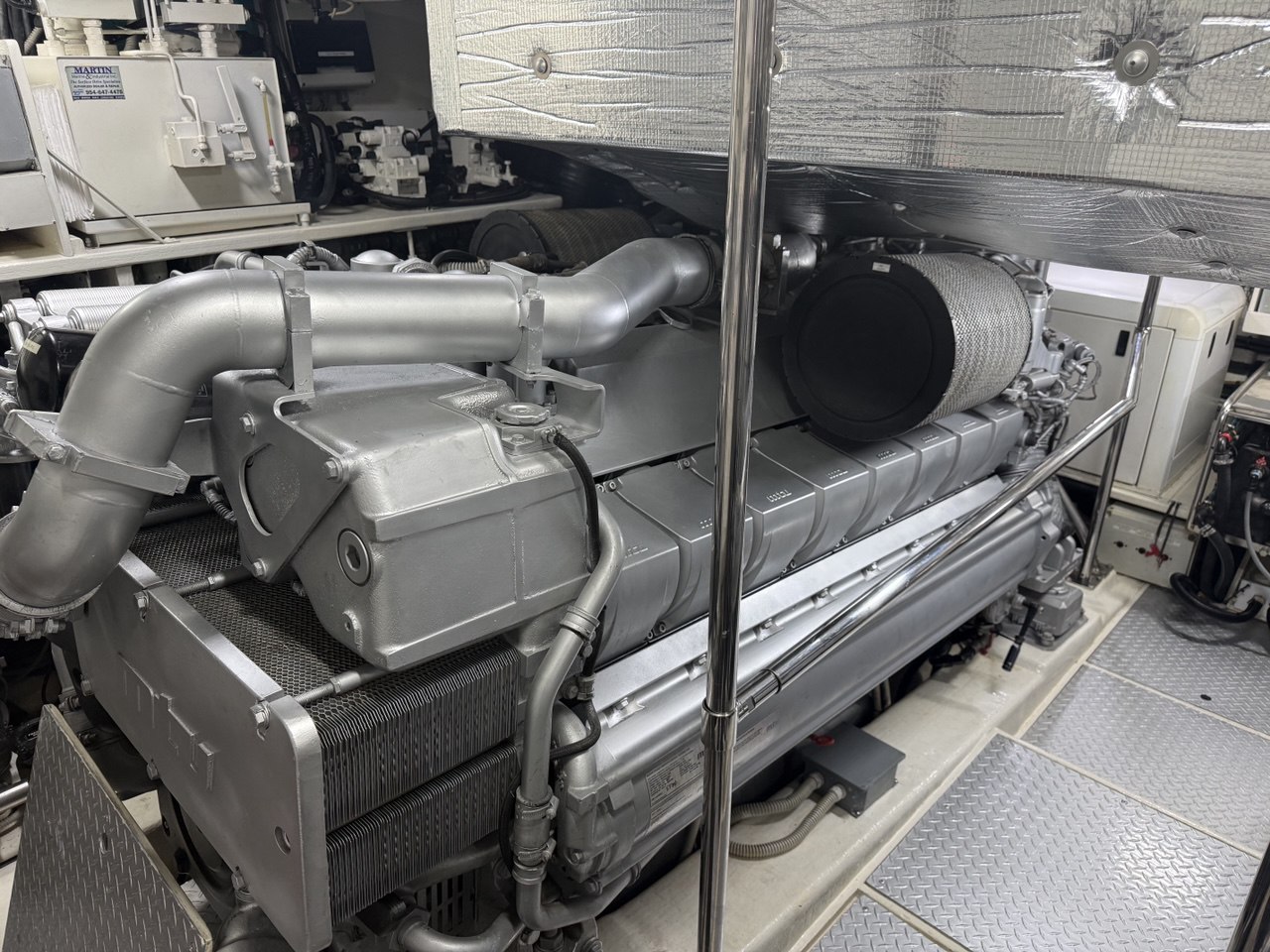
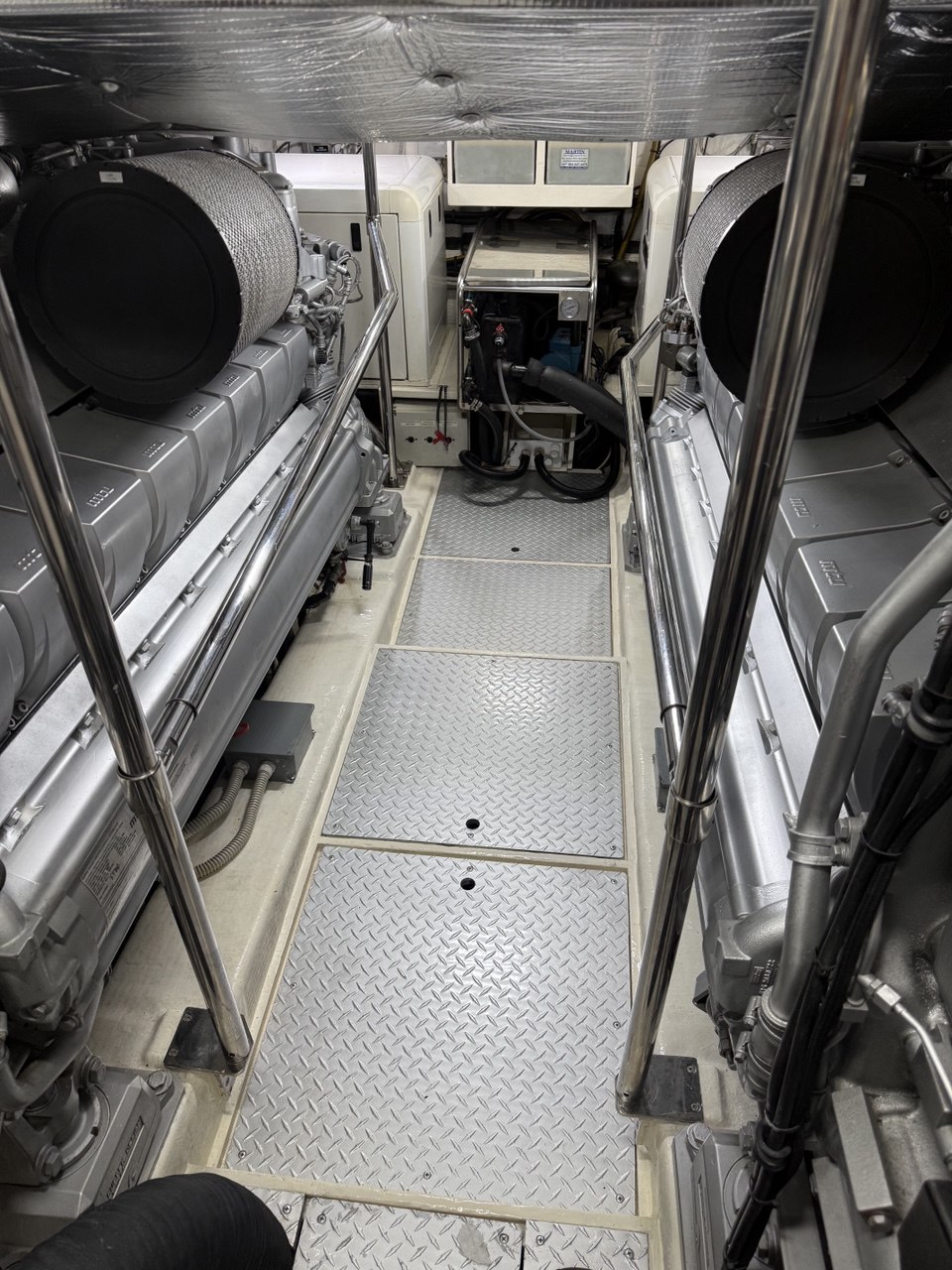
Engine Room Layout
The Pershing 80 engine room is a masterclass in packaging. Despite housing two 4,600-lb engines, the space includes:
- Seafari watermaker — freshwater production underway
- Martin generator controls — managing the genset(s)
- Raw water manifold system — feeding AC, engines, and generator cooling
- Fuel filtration bank — Racor-style primary and secondary filters
- Sound insulation — foil-faced acoustic panels on hull and overhead
- Diamond plate decking — removable panels for bilge access
What Service Looks Like on These Engines
Servicing MAN V12s in a performance yacht isn't the same as working on a Cummins 6BT in a sportfish. The tolerances are tighter, the systems are more integrated, and the consequences of mistakes are measured in tens of thousands of dollars. A typical service includes:
- Oil and filter change (12+ quarts per engine)
- Fuel filter replacement (primary and secondary)
- Raw water impeller inspection/replacement
- Coolant system pressure test and antifreeze check
- Turbocharger inspection — boost pressure verification
- Belt inspection and tensioning
- Exhaust elbow and riser inspection for corrosion
- Engine mount inspection
- Transmission fluid level and condition check
- Electronic diagnostics — fault code scan via MAN EDC system
Why This Matters
Most marine shops in Southwest Florida max out at servicing outboards and small inboard diesels. When you own a vessel with twin MAN V12s, your options narrow fast. You need a technician who:
- Understands European diesel engineering (MAN, MTU, Volvo Penta IPS)
- Has worked in tight, complex engine rooms on 60–100+ foot yachts
- Can diagnose electronic engine management systems
- Carries proper tooling for metric fasteners and high-torque applications
- Holds a USCG captain's license for sea trials after service
That's what Accumar brings. 25+ years servicing private, commercial, and government vessels — from 20-foot center consoles to 100+ foot superyachts.
FAQ
What MAN engines does the Pershing 80 use?
The Pershing 80 is factory-equipped with twin MAN D2862 LE V12 diesel engines, typically in the 1,400–1,550 hp range per engine depending on the model year and variant.
How often should MAN V12 marine engines be serviced?
MAN recommends service intervals of 250–500 hours depending on the specific maintenance item. Oil changes at 250 hours, fuel filters at 500 hours, and major service (valve adjustment, injector testing) at 2,000–3,000 hours.
Can Accumar service large yacht diesel engines?
Yes. We service MAN, MTU, Caterpillar, Cummins, and Volvo Penta diesel engines in yachts up to 100+ feet. Our technicians have decades of experience with European and American marine diesel platforms. Call 239-323-9600.
Do you do sea trials after engine service?
Yes. Our owner holds a USCG 200-ton Master Captain license, allowing us to conduct sea trials after major engine work to verify performance under load.